
5 Minute Read / Listen
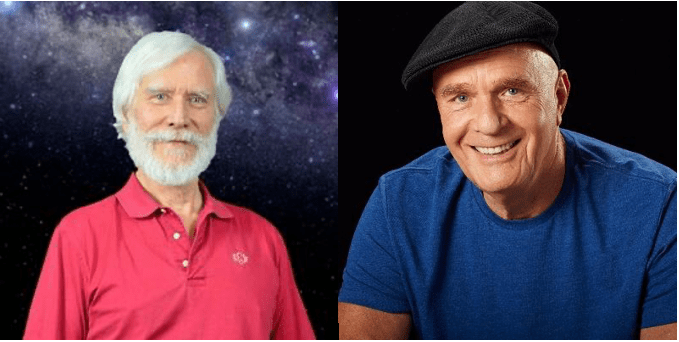
Embarking on the journey to elevate my own awareness, I closely followed the works of Wayne Dyer, an author who significantly influenced my perspective. Prior to delving into his writings, I had not devoted time to spirituality, mistakenly associating it solely with organised religion. However, my outlook underwent a transformative shift after encountering Dyer’s insights on religion. The specific words that triggered this epiphany were:
” My beliefs are that the truth is a truth until you organise it, and then it becomes a lie. I don’t think that Jesus was teaching Christianity, Jesus was teaching kindness, love, concern, and peace. What I tell people is don’t be Christian, be Christ-like. Don’t be Buddhist, be Buddha-like. Religion is orthodoxy, rules and historical scriptures maintained by people over long periods of time. Generally, people are raised to obey the customs and practices of that religion without question. These are customs and expectations from outside the person and do not fit my definition of spiritual.”
In the vast tapestry of philosophical thought, the words of Wayne Dyer resonate with a profound simplicity that also very much echoes the sentiments of Tom Campbell’s My Big TOE (Theory of Everything).
Dyer’s assertion that “the truth is a truth until you organise it, and then it becomes a lie” sets the stage for a contemplative exploration of spirituality—one that transcends the boundaries of organised religion and delves into the core teachings of figures like Jesus.
“I don’t think that Jesus was teaching Christianity; Jesus was teaching kindness, love, concern, and peace.” Dyer’s perspective on Jesus aligns with Campbell’s emphasis on the essence of teachings over the institutionalisation of doctrines. The figure of Jesus, in this context, emerges as a harbinger of virtues rather than a proponent of a specific religious framework. The core message, as interpreted by Dyer, is an invitation to embody kindness, love, concern, and peace—a call that transcends religious labels.
“What I tell people is don’t be Christian, be Christ-like. Don’t be Buddhist, be Buddha-like.” Dyer’s counsel resonates with Campbell’s call to move beyond religious labels and embrace the embodiment of spiritual virtues. To be Christ-like or Buddha-like is not a call for adherence to a particular dogma but an encouragement to live in alignment with the profound virtues espoused by these spiritual figures. It is an invitation to internalise the teachings and manifest them in our daily lives.
“Religion is orthodoxy, rules, and historical scriptures maintained by people over long periods of time.” Dyer’s critique of religion as orthodoxy aligns with Campbell’s deconstruction of organised truth. Both thinkers highlight the potential distortion introduced by human interpretation, institutionalisation, and rigid adherence to historical scriptures. The essence of spirituality, they suggest, lies beyond the confines of religious dogma.
“Generally, people are raised to obey the customs and practices of that religion without question.” Dyer’s observation on the unquestioning adherence to religious customs echoes Campbell’s call for conscious exploration. The tendency to follow customs without question, they suggest, inhibits genuine spiritual growth. True spirituality, in their view, requires a personal journey of discovery and understanding rather than blind conformity.
“These are customs and expectations from outside the person and do not fit my definition of spiritual.” Dyer’s delineation of customs and expectations as external to the individual aligns with Campbell’s emphasis on the internal, experiential nature of spirituality. Both thinkers reject the notion that true spiritual growth can be dictated by external norms; rather, it is a deeply personal journey of self-discovery and connection with the divine.
In amalgamating the insights of Wayne Dyer and Tom Campbell, we find a harmonious resonance that urges us to transcend the confines of organised truth and religious orthodoxy. The path to true spirituality, as envisioned by these thinkers, lies in embodying virtues, questioning established norms, and forging a personal connection with divinity or larger consciousness system . As we navigate the labyrinth of our beliefs, to find true knowledge, may we heed the call to move beyond organised dogma and embrace the essence of spiritual non physical that resonates with the core of our being.
Written by Stephen Griffin and ChatGPT


 Becoming part of the solution
Leave a comment