
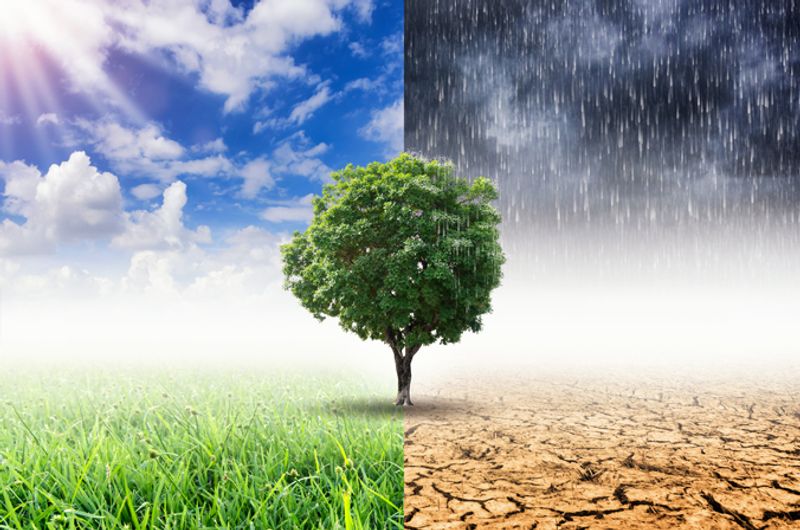
The Earth’s climate has undergone continuous change for millions of years, with periods of rapid transformation and relatively stable epochs. In recent times, there is mounting evidence that our planet is once again in the midst of a significant climatic shift, normally attributed to human activity, particularly the use of fossil fuels. Here we explore the scientific understanding of climate change, its personal impacts, political responses, and the urgency for responsible action, however small, by us all.
Scientists have meticulously examined the Earth’s climate history, often using indicators like ice caps and solar flares. Their research reveals a compelling narrative of climate fluctuations occurring over millions of years. Well before humans inhabited the planet. These changes have sometimes unfolded rapidly, serving as a stark reminder of the planet’s dynamic nature.
Many individuals, including those living in Spain, can attest to the changes in their local climate. Over the past decade, Spain has experienced hotter summers and less rainfall, which aligns with the broader trend of rising global temperatures. While personal observations are not scientific proof, they often serve as a compelling call to action, prompting individuals to investigate the broader context of climate change.
The debate over the causes of climate change continues to rage. Some scientists argue that the recent climate changes are primarily due to human activities, especially the burning of fossil fuels, which release greenhouse gases into the atmosphere. Others contend that natural factors also play a significant role in climate variability. This complexity fosters skepticism and uncertainty.
Setting aside the substantial influence wielded by corporations, politicians, who are entrusted with the responsibility of making pivotal decisions regarding climate policies, must grapple with this scientific uncertainty. Mainstream scientific consensus often guides their actions, as they seek to address the concerns of their constituents. However, they also face the inherent need to protect their positions, which can sometimes lead to cautious or politically motivated decisions.
Regardless of the ongoing scientific debate, it is clear that humanity is not treating the Earth with the respect it deserves. Examples of our disregard for the environment include deforestation, ocean pollution, and habitat destruction. Such actions harm ecosystems and disrupt the delicate balance of nature.
The metaphorical notion that “Mother Earth” may indiscriminately retaliate one day against the abuse she suffers serves as a sobering reminder of the potential consequences of our actions. The Earth can only endure so much damage before consequences become inevitable.
Transitioning away from fossil fuels is a monumental task, considering the two centuries of technological advancement built upon them. Additionally, many financial institutions and retirement funds are deeply invested in the fossil fuel industry, further complicating the shift to sustainable energy sources.
While change is necessary, it must occur at a pace that considers the intricate web of dependencies in our society. The transition to cleaner energy sources is not just a matter of policy; it is also an ethical imperative. Just as a person with a lung infection should not smoke, humanity must reduce its pollution and cease the exploitation of Earth.
Climate change remains a topic of considerable scientific, political, and personal interest. The ongoing debate over its causes should not deter us from the imperative of responsible action. Regardless of the extent to which humans are responsible for climate change, it is undeniable that we must respect and protect our planet. In the face of uncertainty, our collective responsibility is clear: we must strive for a sustainable future, where humanity’s relationship with the Earth is one of stewardship rather than exploitation.
Stephen Griffin with help from ChatGPT
Related Article
Love & Fear“Navigating the Paradoxical Relationship for Personal and Global Transformation”


 Becoming part of the solution
Leave a comment