
4 minute read :
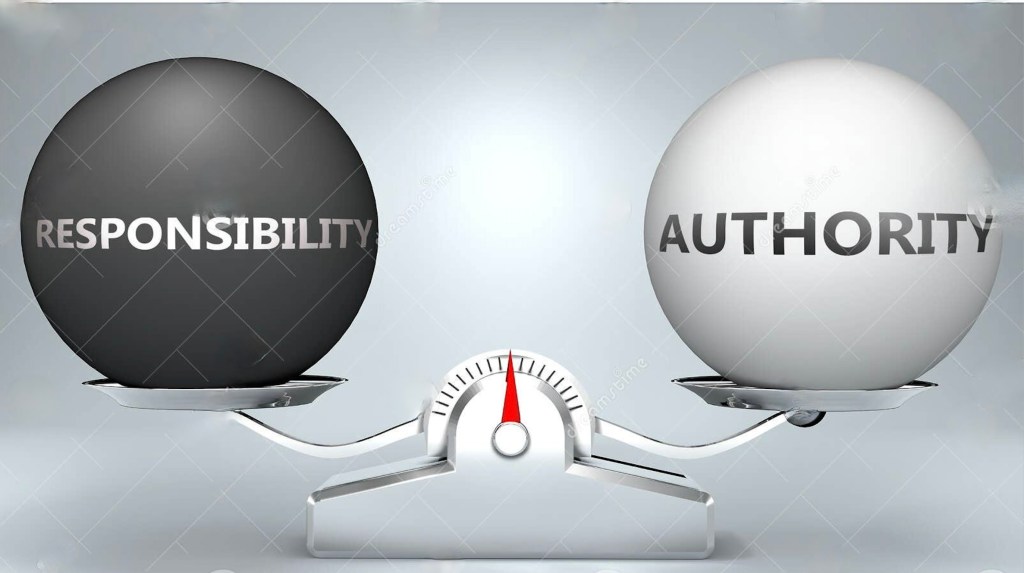
The intricacies of human behaviour are often encapsulated in the adage, “To every action, there is a reaction.” This timeless principle becomes especially pertinent when considering the relationship between authority and responsibility. A vexing issue that demands scrutiny is the penchant for wielding authority without acknowledging the corresponding responsibility. This phenomenon, both at the macro and micro levels, perpetuates a cycle of consequences that resonates throughout society. While politicians, corporations, and other entities often bear the brunt of critique, it is crucial to recognize them as mirrors reflecting societal values. Real change, as this essay contends, can only be realized through individual recognition and acceptance of responsibility.
The paradox of authority without responsibility has roots in the human desire for control. People often seek positions of authority to exert power, but simultaneously evade the responsibility that accompanies it. This disconnect is emblematic of a short-sighted approach, disregarding the interwoven nature of these two elements. Macroscopically, this disjunction manifests in various sectors. Politicians may wield influence without enacting policies for the greater good, and corporations might chase profits without considering environmental or ethical consequences. These instances are not isolated; rather, they reflect the society’s values and expectations.
Yet, the issue permeates the micro level as well, amplified by the digital age. The internet’s proliferation has endowed individuals with newfound platforms for asserting authority—often without accountability. Social media platforms, while granting voices, have also given rise to cyberbullying, misinformation, and polarization. This underscores the larger problem: individuals seeking influence without bearing the weight of repercussions.
Criticism of politicians, corporations, and institutions must be accompanied by self-reflection. These entities, whether laudable or problematic, are reflections of societal norms. Sustainable transformation requires individuals to align authority with responsibility. This necessitates a shift from self-interest to a recognition of interconnectedness.
Daily life brims with examples of authority without responsibility. Parents who assert their parental authority but neglect their nurturing duties exemplify this. Similarly, children who exploit their parents’ trust may betray their responsibility as recipients of that trust. Employers demanding diligence from their employees while failing to provide a supportive work environment embody this phenomenon too. These examples underscore the pervasive nature of the problem and its varied forms.
Ultimately, change originates from individuals acknowledging that actions ripple through society. Just as external actions elicit reactions, internal motivations prompt external consequences. Harmonizing authority with responsibility entails a conscientious awareness of the aftermath of actions. It mandates a commitment to choices that not only serve personal interests but also enrich the collective.
In conclusion, the dichotomy between authority and responsibility forms a critical nexus in understanding human interactions. The tendency to pursue authority while evading responsibility is a myopic perspective that defies the law of cause and effect. This issue reverberates from personal choices to societal structures, epitomised by politicians and corporations. Yet, the key to transformation lies in individual responsibility, transcending the blame game to recognise societal reflection. Only by shouldering responsibility for our actions can we surmount this paradox and pave the way for a more conscientious, equitable world.
Stephen Griffin and ChatGPT


 Becoming part of the solution
Leave a comment